

This is the fourth article of a special series all about whites which I hope will take the guesswork out of the process, and make paint selection easier, quicker, and stress-free.
As we’ve seen in previous articles, white (and all colors for that matter) needs light to come alive. Without it, a shade can feel clinical and stale, overwhelming and washed out. Lighting is THE most important thing to consider when it comes to white. Once you understand how transformative light can be, as well as what can affect its color, you will be able to offset several issues with the right approach and a few clever tricks.
We’ve discussed how artificial lighting impacts how your color looks like and now, I am digging into natural lighting.
Natural Lighting
Just like how the Kelvins of light bulbs at home can take a wall color from warm to cool, the same applies to natural daylight.
The perfect white in a home in Reykjavik will look completely different when used in Los Angeles or Manila.
Put simply, this is because our eyes perceive colors based on light’s energy, measured in wavelengths, each of which disperses a different color. The further south you go, the longer wavelengths so the redder the light becomes, and light appears bluer in the north because it has shorter wavelengths.

Photo: Lumen Learning
This explains why your geographical location, more precisely the sun’s trajectory and position in the sky, is important to consider when choosing (and troubleshooting) your white wall color.
Exposure
Did you ever have a color you used around the house but in one particular room, it just isn’t quite right? The problem might have been caused by its positioning. The angle the sun takes throughout the day can mute or distort your white’s undertone.
So one of the first steps when choosing the right white wall color is to identify the main window in the room (usually the largest), as well as its exposure. Does it face north, south, east or west?
Northern exposure*:
North-facing rooms don’t get direct sunlight throughout the day. The perk is that since the light is more consistent/constant throughout the day, it is somewhat easier to pick a paint color. It also means you will have fewer shadows (and color differences) within the room.
With a cooler, northern light coming in, a white will take on a blue tinge and a grey cast will dominate, which can make the room look flat and dull.
With large windows, the space will appear bright, but it will never be warm, even if there is a secondary light exposure from the south, east or west. You just have to accept that no matter which white you choose, you will never get that sun-drenched look. But you might get close enough with cleverly positioned lamps and the right range of Kelvins.
If a white has cool undertones, like blue or purple, know that these will be enhanced in a north-facing room, making it feel colder. You can balance things out with a color that has a hint of red, orange or yellow, to make the space feel welcoming and cozy, and to add vitality. But even a warm white won’t look as warm in a north-facing room as it would in a room with a warmer exposure.
The warmer the white, the more it will balance out the effect of cool northern light.

Photo: Philip McCann
Southern exposure*:
Rooms with a southern exposure get direct sunlight all day long, making any space feel warm and lively without even trying.
This intense natural light adds visual heat and can bring the best in cool and warm colors. But it can also be harsh on sunny days, particularly at noon – Your color might appear washed-out, faded or dull, while a darker, moodier hue will seem bright and overly saturated.
The light changes a lot in a south-facing room, so make sure to check out color samples in the morning, mid-day, and late afternoon, over several days and, preferably, with different weather conditions e.g. bright sunny day vs overcast skies.
With southern exposure, your white will appear whiter especially at the height of the day, but with a hint of yellow and orange. If you want a crisp white that doesn’t steer towards cream, you will want to balance things out with a cooler white. This is particularly true for rooms with lots of windows. Make the room visually more comfortable with a white that has some depth.
Revisit the article about light reflectance value – It is quite helpful when choosing a color and especially for sun-drenched south-facing rooms. If the room has a LOT of light to reflect, you might want to look at colors with a lower LRV.
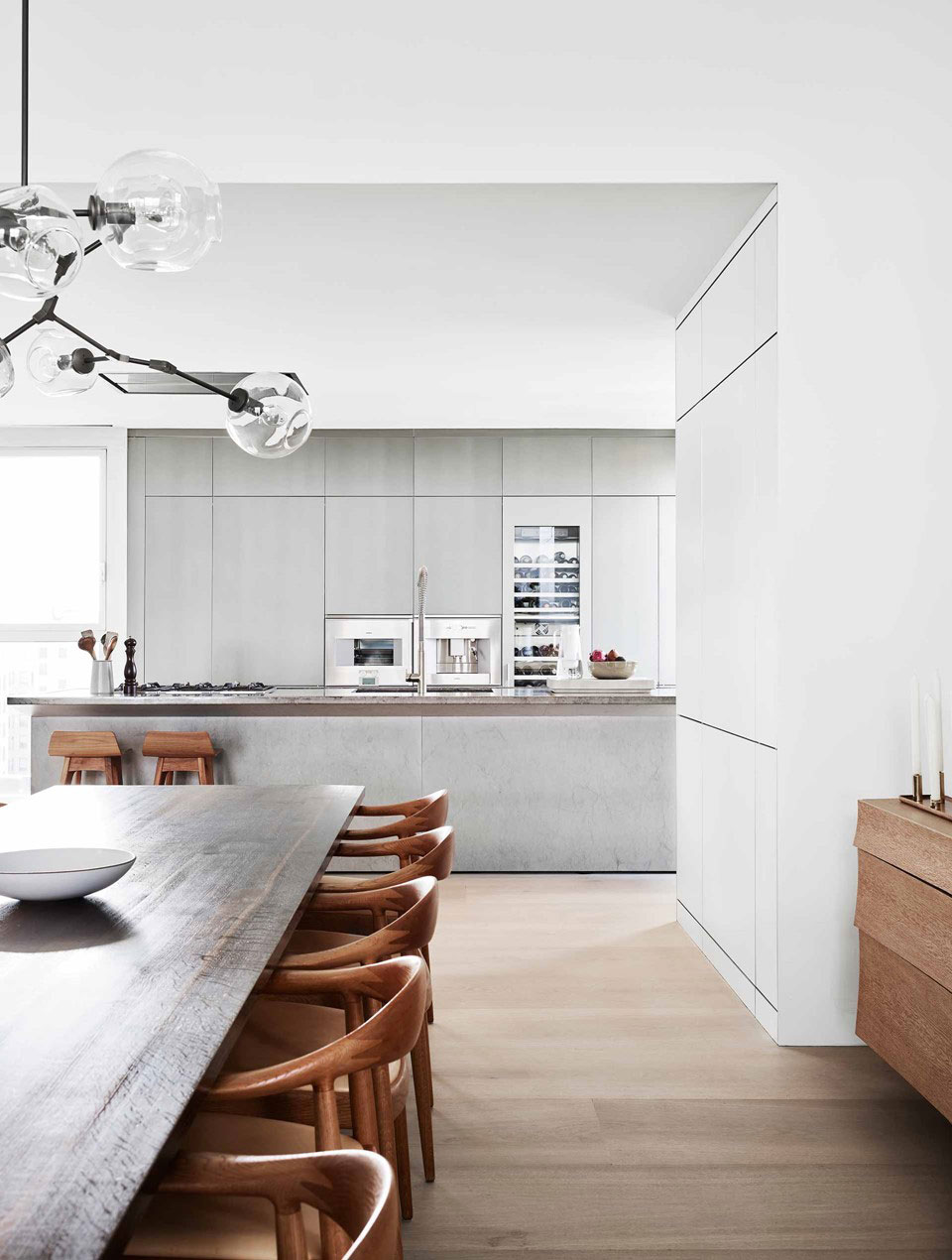
Photo: Brooke Holm
Eastern exposure:
East-facing rooms are flooded with natural light in the morning but gradually become darker as the direct sunlight disappears. Typically, the light reflected goes from soft yet bright and warm, with clear sun rays, to a greyer and cooler cast past noon.
Cool whites are nice and refreshing in east-facing rooms, although they risk falling flat most of the day. This problem can be solved with sufficient artificial lighting.
Warm whites, with red, orange or yellow undertones, will be quite lovely and offer balance because from mid-day when the sun is at its highest, you will start losing visual heat.
Whites with a bit of grey in them are more likely to be dull towards the end of the day, but this isn’t necessarily a bad thing. For instance, you might like a bedroom’s wall color to have more vitality in the morning, but to be moodier at the end of the day.
Think of when you are in the room the most, and let this guide your decision.

Photos: Colin King interiors
Western exposure:
Rooms with western exposure only get direct sunlight after noon, meaning that your white will be subdued, likely greyed-out and shaded until mid-day. It will then be at its brightest past noon, with bright rays peeking through, and the light will get a warm, orange glow as the sun goes down.
Do you mostly spend time in this room in the mornings? Whites with warm undertones will make the room feel more comfortable, while cool whites might fall flat (although they can still be refreshing and crisp; it depends on your overall color palette). On the other hand, if you mostly use the room in the afternoons, the light will add extra visual heat.
Interesting fact: If the ambient temperature gets warm at the end of the day, your eye will perceive the color as warmer, too! So keep that in mind if you live in a hot climate, as well as the mood you want to create.
If you want to cool things down, choose whites with cool undertones (think blue, green, and purple).
Whites with a bit of grey in them are more likely to be dull during the morning hours.
With lots of windows, a west-facing room can benefit from a white with a green undertone or earthy base.
*It’s different if you live in the Southern Hemisphere, where the sun takes a different trajectory: North-facing rooms will get the most direct, warm daylight, while south-facing rooms will have the coolest light.

Photo: Philip McCann
What does it mean to you?
So, what do you do with all that information?
First things first, I want to reassure you: You don’t have to figure out a different white wall color for each and every room of the house just because they have different exposures.
Understanding a room’s orientation, and therefore its unique lighting pattern, is simply a helpful tool to help you narrow down endless options and to possibly troubleshoot a white that seems off (no pun intended).
It is relevant to ask yourself what is the purpose of a room, how much time you spend in it, and when. Where is the sun when you use it? Does it get a lot of natural daylight based on its positioning? What is the mood you want to create? Do you need a cool or a warm white?
Make sure to observe your color samples at different moments throughout the day, and over several days, so you get the most realistic representation of your white. Your color should be appealing under various lighting conditions.
Remember: You can use sheer curtains and blinds to adjust the flow of light, and good artificial lighting is your friend. Experiment with different types of bulbs and Kelvin ranges.
Don’t be afraid of making a mistake. In the end, nothing wrong with a color if it is used intentionally. And paint is just… paint! You can always repaint the walls if you can’t live with the color. But hopefully, with some color theory and this article series, you will have the confidence to choose the right white for your room.
The key takeaway is that white is highly reflective, and it will inevitably be affected by the color of the light it reflects, whether it is artificial or natural. By understanding how different ranges of Kelvins, light reflectance value, and exposures impact what you’ll see on your walls, you can demystify a good chunk and narrow down your options.
Up next — My go-to whites!
First photo: New Works