
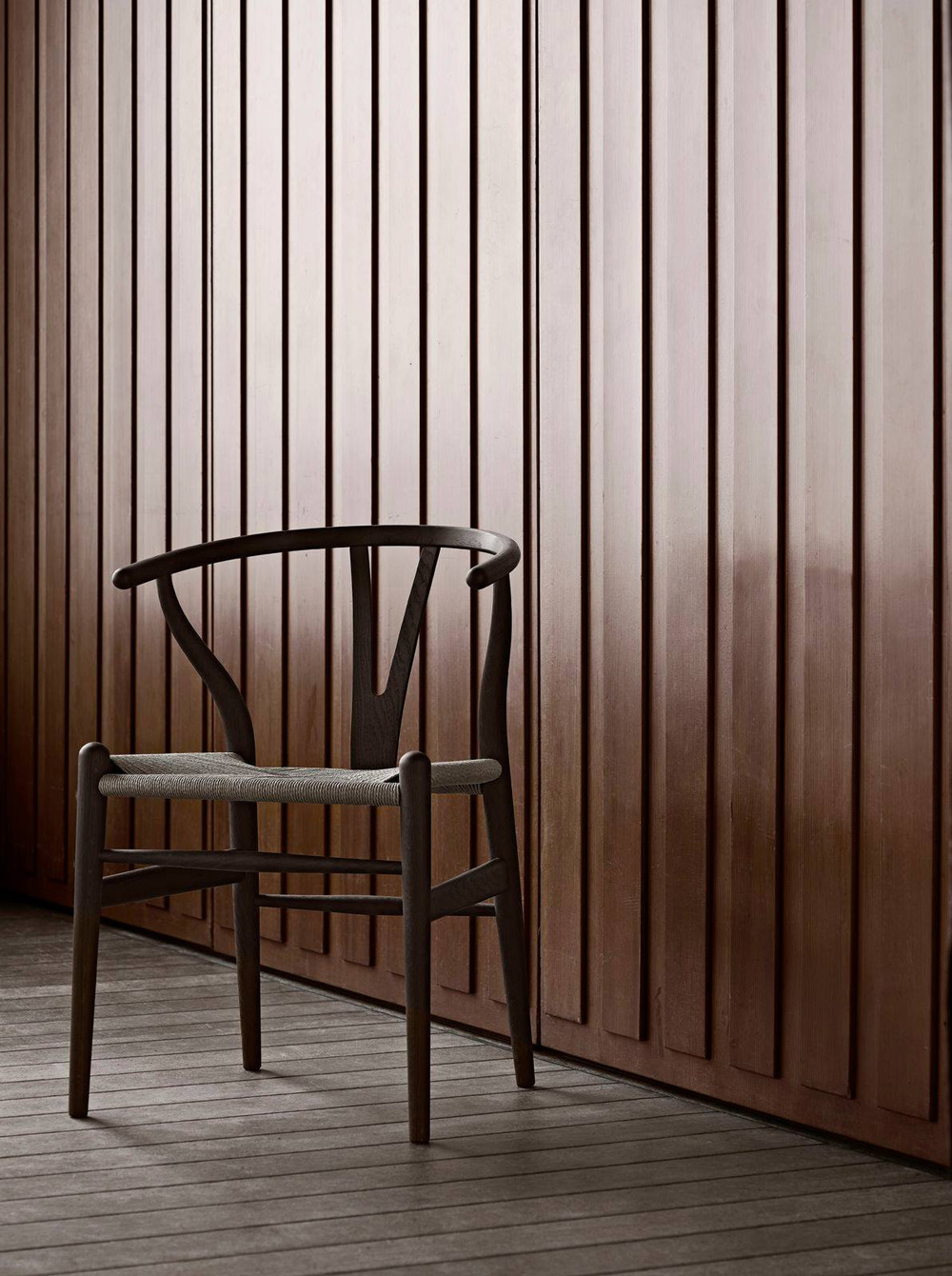
Today, I am sharing an article written by one of our Insiders, Berlin-based Willi Kampmann. I’ve asked him to share a few words following interesting discussions we’ve had about authentic design vs. replicas inside the community.
Here, Willi shares in knowledge and thoughts on the matter, and I hope you find his text interesting and informative.
Note that this is an opinion piece, and Nordic Design is the outlet. I do not necessarily endorse all beliefs or reasoning below.
But the debate around this topic is precisely what makes it so fascinating.
When you decide to buy a replica, a lookalike or original design, there are ethical, political, socio-economical, and environmental aspects that should be considered; aspects that shape our individual perspective on the matter. This article provides avenues for reflection. Hopefully, it helps you decide for yourself what makes good design, what is truly authentic, and what you value when making purchases for your home.
Replicas, Lookalikes and Authentic Design
by Willi Kampmann
Furniture classics. We all love them! If only they weren’t so costly… But what can we do?
One option is to save up on that special piece we really want, and another is to buy used or vintage. You could also buy something that looks similar enough to make you happy at a lower price (a lookalike). And some of you might have come across another option altogether: Products that look exactly like the classics but that are labeled as “replica” or “reproduction.”
While replicas and reproductions have slightly different definitions – a replica is a reproduction that always has a high level of detail, but not all reproductions do – they are used synonymously for furniture and basically refer to unlicensed designs of famous furniture, lighting or home accessories.
Original vs. Lookalike vs. Replica: A Short Crash Course
Usually, when a designer has an idea, they will create a product sketch and then work together with a manufacturer to develop the concept and bring it to market. They will create dozens of prototypes before they settle on the final design, and more often than not, it won’t even make it to market at all.
Although the final design is mass-produced, the initial production run will be considered “the original”. Over time, new versions with small differences might be introduced, switching to new materials or licensing to other manufacturers, for instance. Nevertheless, it’s always the product with an official license that will be labeled as the “genuine” or “authentic” product.
The Traditional Alternative: Lookalikes
When a design becomes very popular, other companies will want a share of that market. Copyright laws traditionally prevent them from just downright copying the design 1:1, so manufacturers will instead create derivative designs that resemble the original as much as possible but are different enough to avoid legal troubles.
These are lookalikes, less charitably also referred to as cheap copies, copycats, or knock-offs. Some companies occasionally add something of their own to the design, but many are just lousy imitations that are less sophisticated in terms of the manufacturing process, materials, details, etc.
However, the line between imitation and homage is often blurred and subjective to a point (more on that down below). The perception of whether a lookalike is bad sometimes changes over time and it becomes appreciated after all – Take the case of Plycraft, for instance:
In the 1960s and 1970s, PlyCraft was an infamous copycat producer who created endless lookalikes of the Eames Lounge Chair, with its Mr. Chair series. Some looked quite crude in comparison, with the wrong angles and visible screws. Others looked more refined, and some introduced unique elements like a reclining mechanism or a more organically shaped base that was bent into the armrests.
Today, these versions of the iconic lounge chair are also sought-after, and many of them sell for thousands of dollars (read more about it here).

Fun fact: You can see a possible PlyCraft chair in the second season of Friends.

Another example of a design that gained tremendous popularity partly due to a lookalike’s success is the Model 3107 (in Series 7) chair by Arne Jacobsen. In 1963, model Christine Keeler posed naked astride a modern plywood chair, and the photos captured by Lewis Morley became iconic images of the 1960s. Many believed the chair was one designed by the Danish designer, but it was a lookalike; one that still gained a place in the V&A Museum in London.


The new option: replicas
Replicas on the other hand are by definition 1:1 copies. This is a fairly new market that developed around the turn of the century in Italy and then reached the UK. The reason why this industry is so new and why it took roots in those countries is because of how copyright laws work and differ from one country to the other.
Put very simply, copyright exists to help creatives earn money from their ideas. But how long this copyright should stay in place is debatable, and many countries have a different take on this. Most of them protect intellectual property for 50–70 years after the author’s death.
Until recently, the UK had an exception for design copyright that restricted its protection to only 25 years after publication, after which a design would enter the public domain and be free for anyone to use.
This is why you usually won’t see exact replicas of contemporary designs in Western shops, but only of pieces from the Bauhaus or Mid-Century Modern eras, which are between 50 and 100 years old.
Usually, replicas are labeled as such or as reproductions, and the name is often the same as the original:

The line between lookalike and replica is blurred
Replicas manufacturers claim to make faithful reproductions, but it’s not always the case and especially not for cheaper options due to cost-cutting measures. And there are lookalikes that are almost identical to the original designs but aren’t labeled as replicas and even given random names instead. These can even be copies of contemporary designs.
If a product looks like another but doesn’t mention the original designer or the term “replica” or “reproduction”, it will most likely be a “loose reproduction” with differences that are not always noticeable to the novice’s eye. So it’s definitely not easy to navigate around all these options and to know what your money is actually getting you. Do some research before you buy.


Wouldn’t It Be Better To Buy An Original?
You can never go wrong with buying from premium manufacturers like Herman Miller, Vitra, Carl Hansen, Fritz Hansen, and Louis Poulsen, among others. Everything else set aside, they have pristine manufacturing quality usually in first-world countries with good worker compensations. Licensed products are the benchmark to beat.
However, established and highly regarded companies will often claim their products are originals or “authentic”, but many licensed classics aren’t actually 100% identical to the initial designs at all…
For example, if you look at the Eames Lounge Chair, there are differences in execution between the two official license holders, Vitra and Herman Miller. Which is more authentic?

Meanwhile, Modernica produces high-quality, unlicensed replicas of the Eames Shell chairs using… the original molds and tools! So in a way, they are just as authentic as Herman Miller or Vitra, maybe even more (read some thoughts here). But only one of these companies merges past and present by collaborating with hip artists or brands to create contemporary editions, and that’s neither Herman Miller nor Vitra.

There is also the chaise longue La Chaise that Ray and Charles Eames designed in 1948 for MoMA’s now-famous International Low-Cost Furniture Design competition. They expected it to cost $27 in production, which would be just over $300 in 2021 – Low cost indeed! But apparently, they were too far ahead of their time and the design proved too complicated to manufacture, so it was never released… until Vitra decided to try again and release it in 1991, years after the designers had passed away (and thus were never involved). And about 10 years later, Vitra also reportedly changed the manufacturing process, moving from fiberglass to polypropylene. So it is fair to ask, is Vitra’s La Chaise still an “original” or a replica?

Since 2007, Vitra is also selling the beautiful Eames House Bird which was a famous member of the Eames’ home. But did you know that this isn’t even an Eames design, but a carved figurine from a man named Charles Perdew? The Eames’ bought it from him and just used it as a prop in their home. Yet, Vitra doesn’t credit him anywhere and presumably doesn’t pay his descendants anything either. They couldn’t ask the Eames about their opinion on this because all of this has been done posthumously. Is this really “genuine”? Is it more genuine than the unofficial replicas that have popped up in recent years?

Another example: Serge Mouille (1922-1988) created a series of eye-catching lamps in the 1950s that have become quite popular in recent years. This is astonishing when you consider that the production of the original lamps ceased in 1965 (read more about his work here).
The main reason for this regained interest in his designs is probably due to the fact that his family started production again in 1999 under the brand Editions Serge Mouille. Their lamps are very high-quality and manufactured locally in France, though it appears they aren’t quite 100% identical to the vintage pieces. In any case, these are made to order by artisans and priced accordingly. A single-arm floor lamp, for example, costs $2700 – That’s about 2.3x the price of the Mantis floor lamp, a very similar design that Bernard Schottlander actually created a few years earlier. I think a second reason for Serge Mouille’s renewed popularity is the widespread availability of replicas and lookalikes, at different price points and quality levels.

There are also cases where every product is a replica, like the Acapulco chair. Legend has it that it was created by a tourist who wanted to combine a hammock with a chair, but nobody knows who the designer was. Several companies like Silla Acapulco, Ok Design, and Innit Designs, among others, all claim to produce “the original”. Some companies manufacture in Mexico, near the actual city of Acapulco, which I feel provides some kind of authenticity to the design, especially compared to no-name products from China. But one might still ask: Which of them is more authentic? Does it matter?

If I Can’t Afford A Licensed Product, Should I Buy A Lookalike Or A
Replica?
There’s no clear answer to this and personally, I’d say, it depends. The lines between replica and lookalike are very fluid, as are those between lookalike and homage. Let’s look at this from different angles:
Design & Quality
What’s great about replicas is that by definition, they strive to be true to the original design. So if you are a fan of a particular classic piece and want to go for a lookalike or a replica, the latter is the way to go. But a good replica, that is. And there are replicas that I really think are as good as the genuine products, they might even be better for your needs, in some respects.
For example, some replica companies offer more variety than the licensed manufacturers in terms of colors and materials. Let’s take the Eames chair, for instance: Vitra and Herman Miller only sell the series in either polypropylene or fiberglass. But there is a gorgeous version in transparent acrylic going around on Pinterest, one that you may have seen the TV drama Suits; That has never been a licensed product, but it’s an interesting twist on the mid-century design!

I own an Eames La Chaise replica that has a beautiful fiberglass shell in matte eggshell color and a base in walnut wood. I was able to choose from several different colors and woods when I ordered it. Vitra only offers this chaise longue in white and oak. In the movie 50 Shades Of Gray, you can see a La Chaise in black, which you can’t buy from Vitra either.
Having my furniture match my color palette is important to me, so I wouldn’t have gone for an original even if I had been able to afford it; the licensed manufacturer simply didn’t offer what I was looking for.
But cheap often doesn’t cut it.
The cheaper the replica, the more the quality suffers – and the attention to detail.
One of my favorite quotes is from Charles Eames who said, “The details are not the details. They make the product.” I believe the design classics are iconic because they aren’t just beautiful but sophisticated, too. If details aren’t right, why even bother?
When I looked for my Eames La Chaise, I realized that many – maybe most – replicas of this design really don’t get the dimensions and proportions right. They are just bad imitations. The same is true for the Swan Chair by Arne Jacobsen: The cheapest copies often have incorrect curves, additional seams, and wrinkles everywhere. So the more sophisticated the design, the higher the risk becomes that the replica won’t live up to the original.
Buying a replica online can be tricky because many shops don’t show the actual products but often steal promo photos of the licensed products – Keep that in mind when shopping!


Impacts on the Designer
As previously explained, most replicas are based on classic designs by designers who have passed away for some time already. But occasionally, you might find replicas or very close lookalikes from contemporary designs by creative designers who won’t get any share of the revenue.
One example is Michael Anastassiades and his now-famous IC Lights. You can find lookalikes of his designs everywhere nowadays, even if he released the series just in 2014. The combination of milky glass bulbs with brass stems was also quite popular in the 1960s, but his lamps are still unique in that they are inspired by the balancing act of a juggler.

Risks Of Ordering Replicas
One of the biggest problems with replicas is that licensed manufacturers have lobbied governments all over the world to ban them.
And in 2016 the UK reacted (“rushed”, according to the Guardian) very quickly, which resulted in several companies leaving the country and others into bankruptcy. This situation left many customers without their money or ordered products. I was one of them; I purchased from a company that seemed professional and trustworthy, with good reviews and all, but I lost hundreds of euros…
Some of the stores that have managed to survive the ban are now either only delivering within the UK or Ireland, or are located in Australia where the copyright law is still very lenient.
The store I can recommend is SwivelUK.com (but please don’t hold me accountable if something unfortunate happens). They have a showroom in London, which can be a sign of a credible company that isn’t going anywhere soon. There is also a one-year guarantee on all purchases. However, the company only delivers in the UK, unfortunately, so I had to organize a very expensive FedEx pickup there. But all in all, it might still be much more affordable than buying an authentic piece.
In the USA, Rove Concepts has been around for a long time and keeps getting great reviews. They have some original designs of their own, but they mostly carry replicas. I am not sure how they can get
away with it, though; there might be some loophole somewhere in American copyright law.
Manhattan Home Design, Cult Furniture, and SKLUM are well-known companies that offer both unique (but derivative) designs as well as lookalikes, but the quality might be an issue – Take the time to read reviews before ordering. SKLUM is unique in that it offers kids’ versions of famous chairs that can’t be found anywhere else.
It is also tempting to go right to the source and shop directly from China on sites like AliExpress, where everyone is competing on price, not on quality. The pictures are not always representative of what you get in real life, but it might still be worth a try if you are buying something small or relatively inexpensive. Be aware that there is a risk that customs seize the parcel and destroy it due to pressure from the license holders (this applies mostly to furniture).
Know that many shops selling lookalikes in Western countries simply source from the same Chinese marketplace. For you, the advantage lies in the fact that they import the product themselves, have probably vetted their vendors, and also offer a basic level of guarantee and customer service.
An Easily Overlooked Angle: Environmental & Working Conditions
Licensed products are usually manufactured in first-world countries and have a traceable production chain, but this isn’t always the case for replicas or lookalikes. Many come from China or neighboring countries, and there is no data on the environmental conditions they are produced in. While some of these makers claim to source materials like leather, wool, and wood from responsible sources in Italy, New Zealand, or the USA, it can be difficult -even impossible- to get tangible proof.
Environmental concerns are tied with working conditions. Think of products that contain fiberglass, for instance; this material is extremely hazardous when inhaled. When a factory competes on price alone, are the workers still equipped with the necessary masks to avoid lung damage? How can we be sure the health and safety of workers are not compromised?
These are the kind of things that are problematic with super-cheap products.
The Story Behind The Design
We don’t just buy products, we also buy stories.
When buying a product from “authentic” design makers like Vitra, Herman Miller and like, you will hear stories about origin and craftsmanship. They take pride in promoting their partnerships with some of the biggest names of the design industry. Vintage pieces tell the stories themselves through their patina.
But when buying a cheaply produced product from an unknown source, that story might get lost. Instead, you get a tale of an unloved knock-off that’s simply not an original, a generic product without a name. But it could also be the story of a product that played a key role in making a famous design language more affordable or one of the first design pieces you ever
bought.
The stories we associate with products in our lives change with the value we place on them (and possibly vice versa).
Trends Killing Classics
Replicas and lookalikes make design classics more affordable for the masses. While such “democratization of design” can be a good thing, it can also lead to an overabundance of certain designs. This can actually diminish the originals, create “design fatigue” and make them look too trendy or tacky over time.
Ikea, who sells many lookalikes, almost killed some classics. Take the Poäng chair, for instance; many people are sick and tired of this design nowadays, and this sentiment can easily transfer over to the original piece from Alvar Aalto.

My Personal Recommendation
If you’re interested in a contemporary design, you should really buy the original (maybe used?) or find something that’s similar, but with differences that add something unique to the formula.
If the designer has passed, then I’d argue we shouldn’t focus that much on the license anymore. Instead, we should look at customizability, quality, sustainability, and working conditions. The licensed manufacturer almost always meets these criteria, but so can others. Do your research, and decide what matters most to you.
If you feel that only a licensed product of a famous designer can have a rich enough story for you, then skip lookalikes and replicas.
At the end of the day, how much you -and ultimately your wallet- value each of these criteria is up to you.
– Willi Kampmann
Did you enjoy this article? Do you have something to add? Join the conversation and share your thoughts with us in the community!
Would you like to share your thoughts, knowledge and expertise on a design-related topic? Let me know!
Author: Willi Kampmann
Editor: Catherine Lazure / Nordic Design
First photo: Fritz Hansen