

A matching furniture set is one of the things that drive me crazy. It is my bête noire of interior design (with only a few exceptions), and looking at this is giving me hives!
I get that buying a set is easy and convenient for some people, that it is seen as a “hassle-free solution”… but it makes their home looks dull, dated, and just blah.
If you are reading this article, it means you are a ND Insider and therefore, you are probably interested in putting thoughts and efforts into your design scheme. I know you want a layered, interesting and well-curated interior. So if you have a matching set somewhere in your home, my number one tip is to get rid of it. Instant makeover & gratification!
You don’t have to start from scratch to refresh the look of a room. Swap one or two pieces to jazz things up, or spend a few hours on a DIY project – It’s amazing what a fresh lick of paint can do.
The goal is coordinated furniture, not matchy-matchy, to add tons of personality and to make an interior more dynamic and unique.
Here, I am breaking down a few rules to help you combine furniture – I focused on dining rooms because I know a few of you are currently busy with redecorating this particular space, but the advice below can guide you when pairing pieces in your office, bedroom or anywhere else around the home.
I am also sharing some of my fool-proof chair and table combos – And since I am SUPER into round tables lately, I’ve also made it the guiding theme.
Inspiration


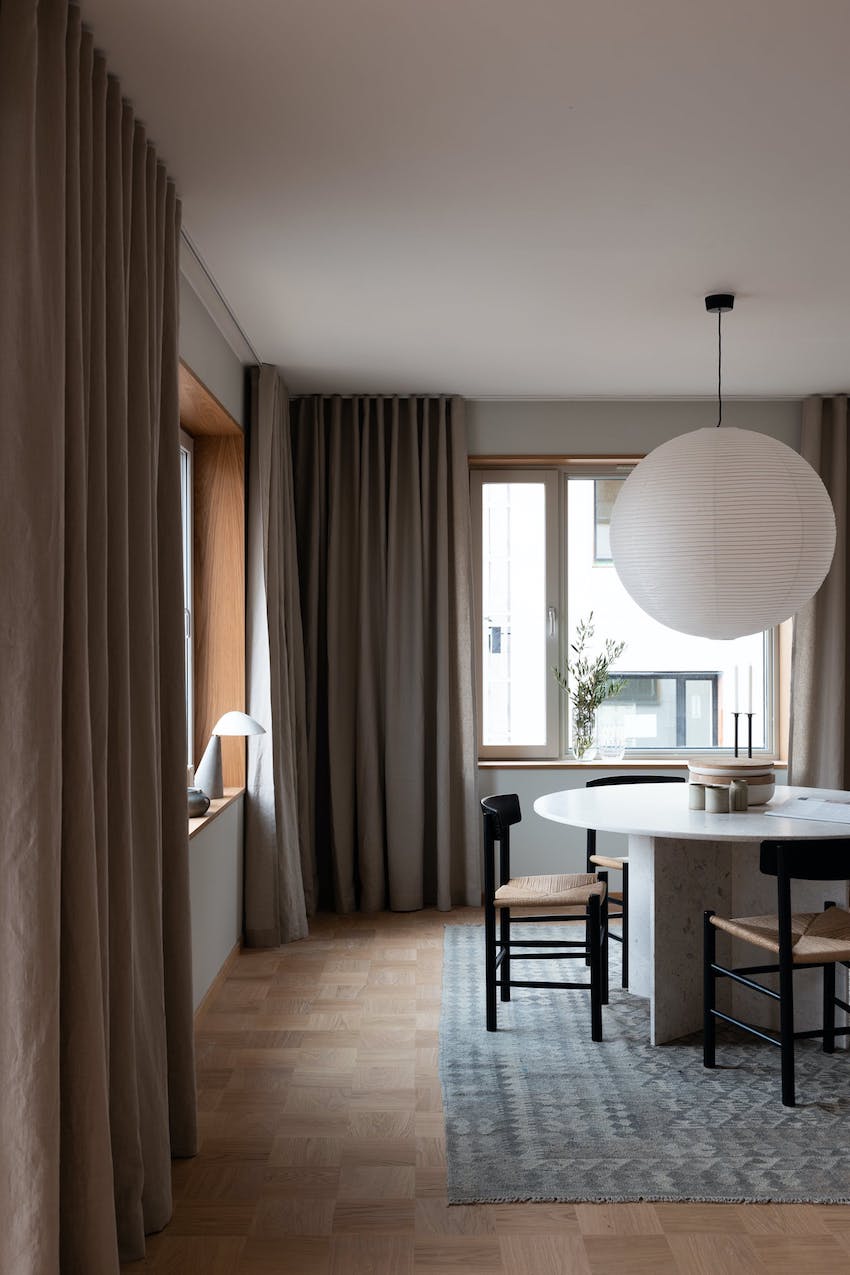

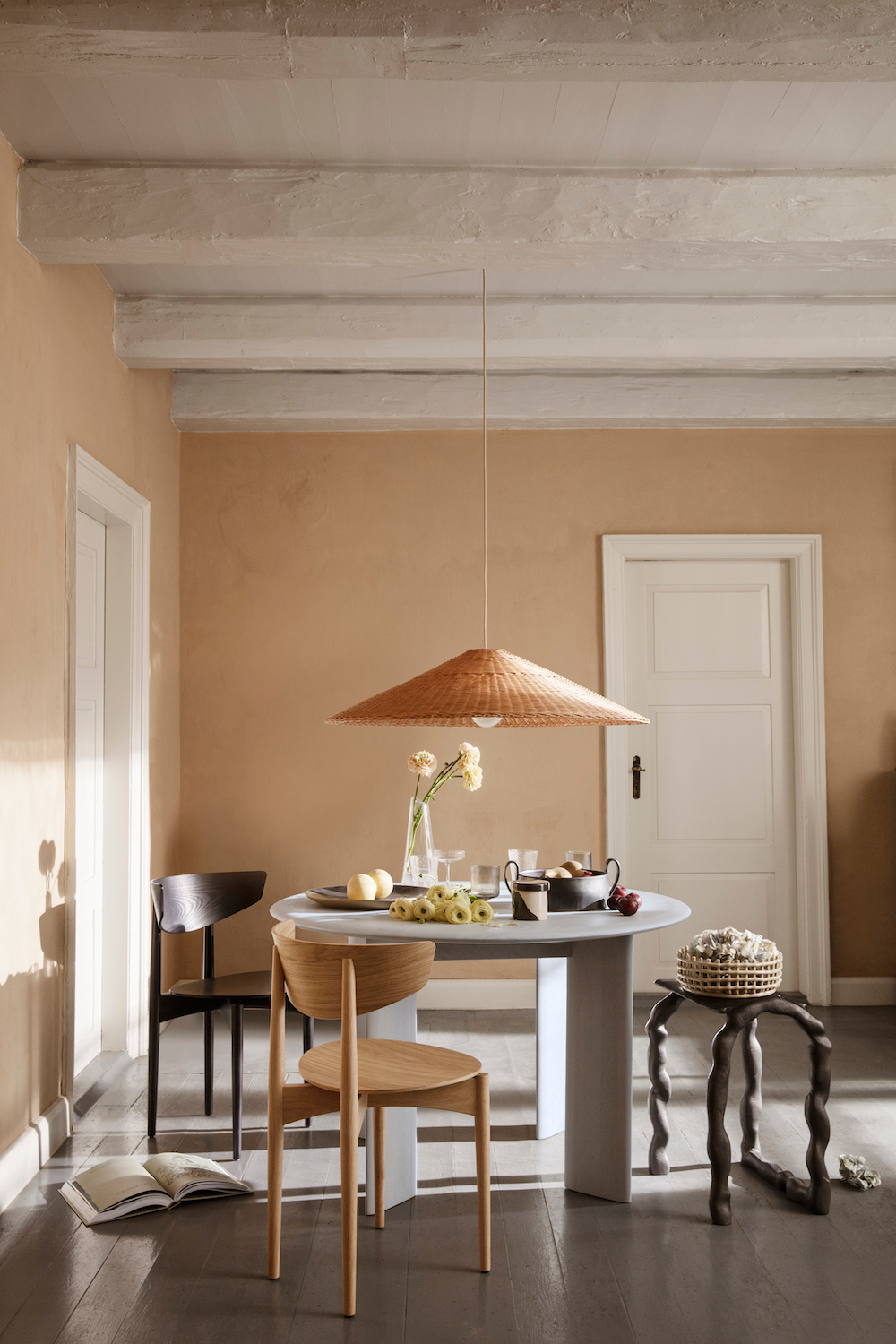

Top tips when combining chairs and dining tables
1. Pick a starting point:
It is important to consider your budget when choosing a starting point – Chairs or a table.
If you can only afford or need to source one of the two, you might have a little less flexibility but finding the perfect pairing is just as much fun.
In the dining room, it makes sense to start with the table; after all, it is the biggest piece of furniture in the room and takes center stage, and it is important that it meets your functional needs.
But if your heart is set on beautiful chairs you’ve spotted at a design store or you absolutely love the ones you’ve already got, then flip the script.
2. Invite contrast:
This is absolutely key for a balanced look when combining tables and chairs. Contrast is THE thing you can do to add visual weight, texture and depth. It what makes the look actually work instead of falling flat. You can bring contrast with a few things:
– With colors
Possibly the easiest way to incorporate contrast is by playing with colors. White and black is an easy and more obvious combo, but you can play up your décor with any other color from your home’s design scheme.
Top tip: Ideally, match your chairs to the rest of the room, not the table! Coordinate them with other elements like lighting, artwork, decorative accents, etc. It’s an easy away to tie the look together.
You can also think about the mood and style you want to create, and which color(s) would be more suited – For instance, jewel tones provide a more dramatic look perfectly suited for glam interiors while golden yellow and wasabi green are often found in mid-century modern palettes. Revisit the article series Find Your style to help you clarify what you like and what your desired look consists of.
If your chairs and table are both in wood, make sure to read my article on how to mix wood tones like a pro.
If you prefer a tone on tone look, whether by using a camaieu of the same color, you’ll want to add variety with different 1) materials and finishes and/or 2) styles and 3) shapes.
Top tip: If your chairs and/or table are too similar to your floors, consider layering a rug to break up all the sameness.
– With materials & finishes
Mixing materials and finishes is another way to create interest. Think organic vs manmade and glossy vs matte.
For instance, acrylic can lighten up a bulky wood table, and upholstery softens any hard or cold surfaces and brings comfort to the look. Lacquered chairs add reflectiveness and drama to a tone-on-tone palette without introducing color.
Let’s say you prefer a tone on tone look, and you want chairs to complement your wooden table. You could go for wooden chairs (same material but different color/tone) or cognac brown leather upholstery (similar color but different material) or chairs with cane seats (similar color but different material).
The more dissimilar the materials are, the more eclectic your room will look. You can make it even bolder by combining high contrast colors, and even more so with different shapes and styles.
– With styles
Mixing and matching pieces from different eras create a bigger design statement because this combination is higher in contrast in terms of styles and definitely more interesting.
It is great for eclectic interiors or if you find your personal style being a mix of two or three styles. When choosing considerably different styles, aim for similar shapes to make the clash less blatant.
If you prefer to stay within the lines of a given style/era (which is easier to do), you can play with colors, materials and scale instead.
Playing with styles is a good option for a wood/wood combo to avoid creating a matching set.
– With scale
Play with shapes and thickness – Slender, light and airy or sturdy and bulky. Experiment with different silhouettes to find the right proportions; Your dining table and chairs should complement each other, not overpower the other. Consider measurements, too (see below for some tips).
If you prefer all “heavier” pieces, then add contrast with colors and materials instead.
Playing with scale is a good option for a wood/wood combo to avoid creating a matching set.
3. Find balance
The right combination of chairs and dining table is all about balance, and this happens when you have the right visual weight – When your eyes can browse around the room in a way that feels natural, pleasing. There are pieces that anchor the space while others make it more open. With too many chunky, sturdy elements, the room is overly weight down; With too many lightweight pieces, there is no anchor in the room for your eyes to rest.
Small and big, angular shapes and curves, a stand alone piece and grouping (promixity), lighter colors and dark shades, shallow and deep elements… You’ve got plenty of things to experiment with!
Top tip: Make sure you take measurements before buying your furniture to verify the size and scale of your dining set, and to make sure it meets your needs:
- Table width – Calculate about 24 inch/60 cm of eating spaces for each person.
- Chair width – Have about 6 inch/15 cm between each chair.
- Chair’s backrest height – Most table are 28-30 inch/71-76 cm high, so make sure the chair’s backrest is higher than this so it doesn’t disappear under the table when pushed in.
- Table height + the seat height of your chairs – Keep about 12 inch/30 cm of space between the two to allow guests to comfortably cross their legs under the table.
Favorite combos
To make things easy for you, I’ve put together 8 fail-proof, designer-approved pairings for you to shop.

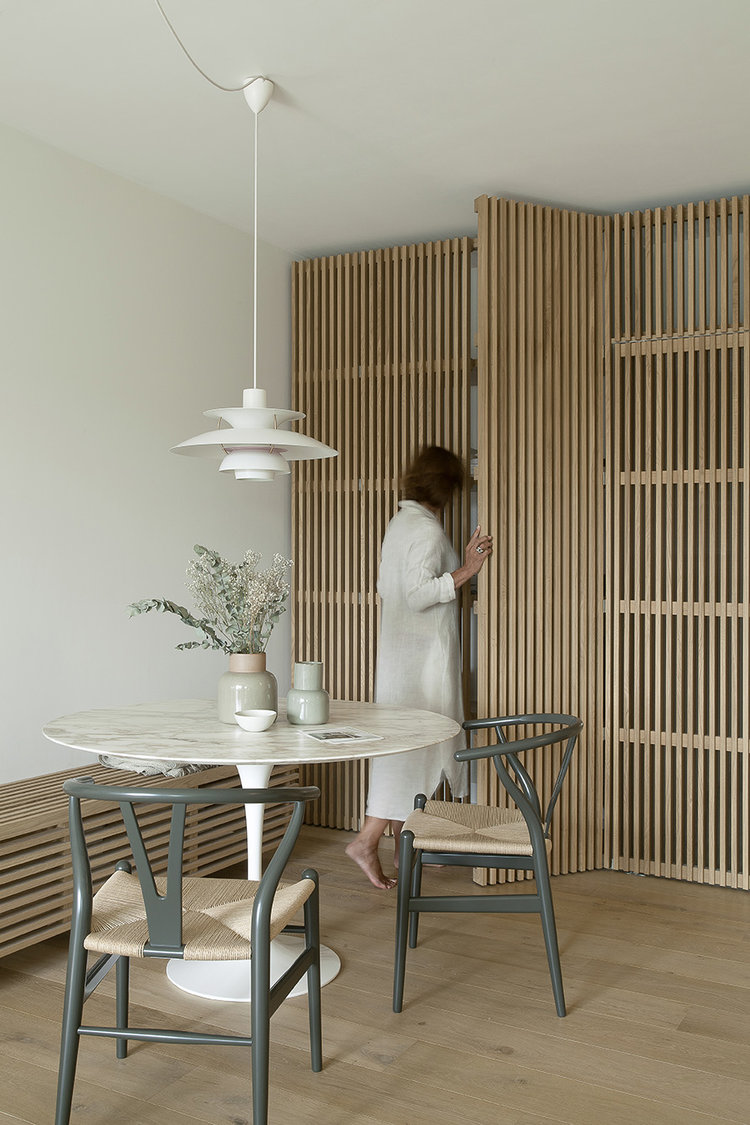
An absolute timeless mix, and one that can often be spotted in homes shared on ND. You can’t go wrong with a Tulip table and Wishbone chairs. Here, I’ve chosen a contrasting white and black combo.

I love how the camel leather complement the sand-colored stone. A mid-century piece combined with a modern Scandinavian design that is reminiscent of the same era – Beautiful!

Same material, different color. Both have curves, but one is heavier while the other is lighter. Great balance!

The camel, with its orange undertone, is in the tonal palette as the red legs of the table, so they are different but the look is cohesive. The blue top, however, creates tension (a good thing) because this hue is on the oppositve of orange on the color wheel. A fabulous combo with an unexpected touch.

The chair’s thin legs balance out the heaviness of this pedestal table, and the upholstery brings comfort and softness to the look of this metal table.

Industrial meets farmhouse. The widest point of the chair’s legs echos the table’s proportion, while being lighter at the same time. Black against wood is a timeless pairing.

A mid-century piece combined with a modern Scandinavian design that is reminiscent of the same era. The warm beige upholstery and walnut are in the same color palette but at opposite ends of the spectrum (dark. vs light), making the duo cohesive.

Plush upholstery and slender legs complement beautifully the bulkier wood pedestal table. And it’s very chic!
More affordable alternatives
I’ll admit, these sets above are not for small budgets. But is where I like to shop for more affordable chairs and tables under $1000. Your options are more limited, but I am sure you can find something to your taste.
- Ikea
- Urban Outfitters
- West Elm
- CB2
- Allmodern
- World Market
- Lulu & Georgia
- Industry West
- Target
- Pottery Barn
- Home Depot
I hope these tips give you confidence when mixing furniture for your dining room, and maybe a bit of guidance for other rooms around the house. But mostly: I hope that you will never look/consider a matching furniture set EVER again!
Remember: These are general tips based on my experience. But your home, your rules! There is nothing wrong with a color, shape, piece or design statement if it is intentional. So as long as you make considered choices, all will be well :)
First photo: 3D renders by Artem Trigubchak
Pin this for later:
